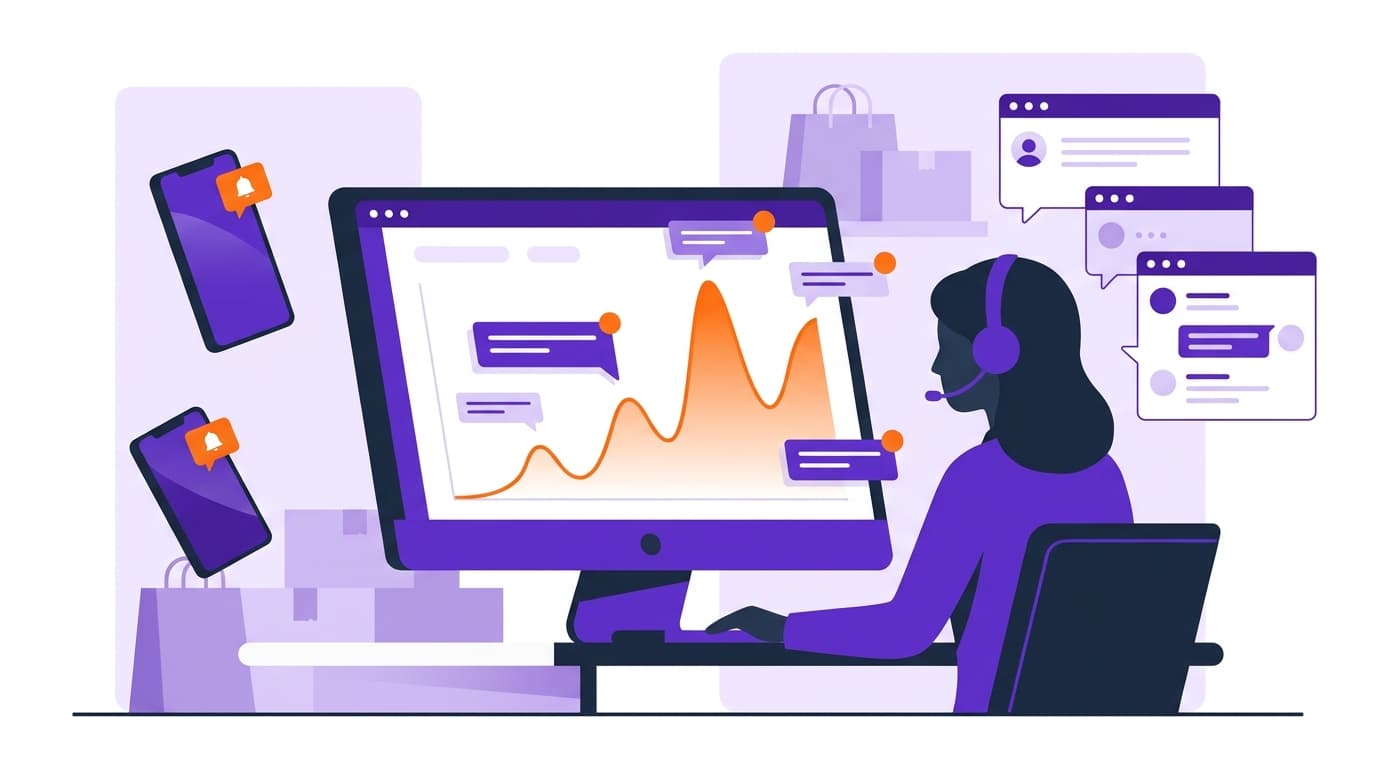
The November shopping season is not a single day in the e-commerce calendar. The momentum that starts on Wednesday, 11 November 2026 builds to Black Friday on Friday, 27 November 2026 and Cyber Monday on Monday, 30 November 2026, then spills into December as shipping, refund and invoice questions. Campaign planning usually starts with stock, theme and ad budget. Yet in the very same weeks the volume landing on customer support grows and, more importantly, the nature of those messages changes.
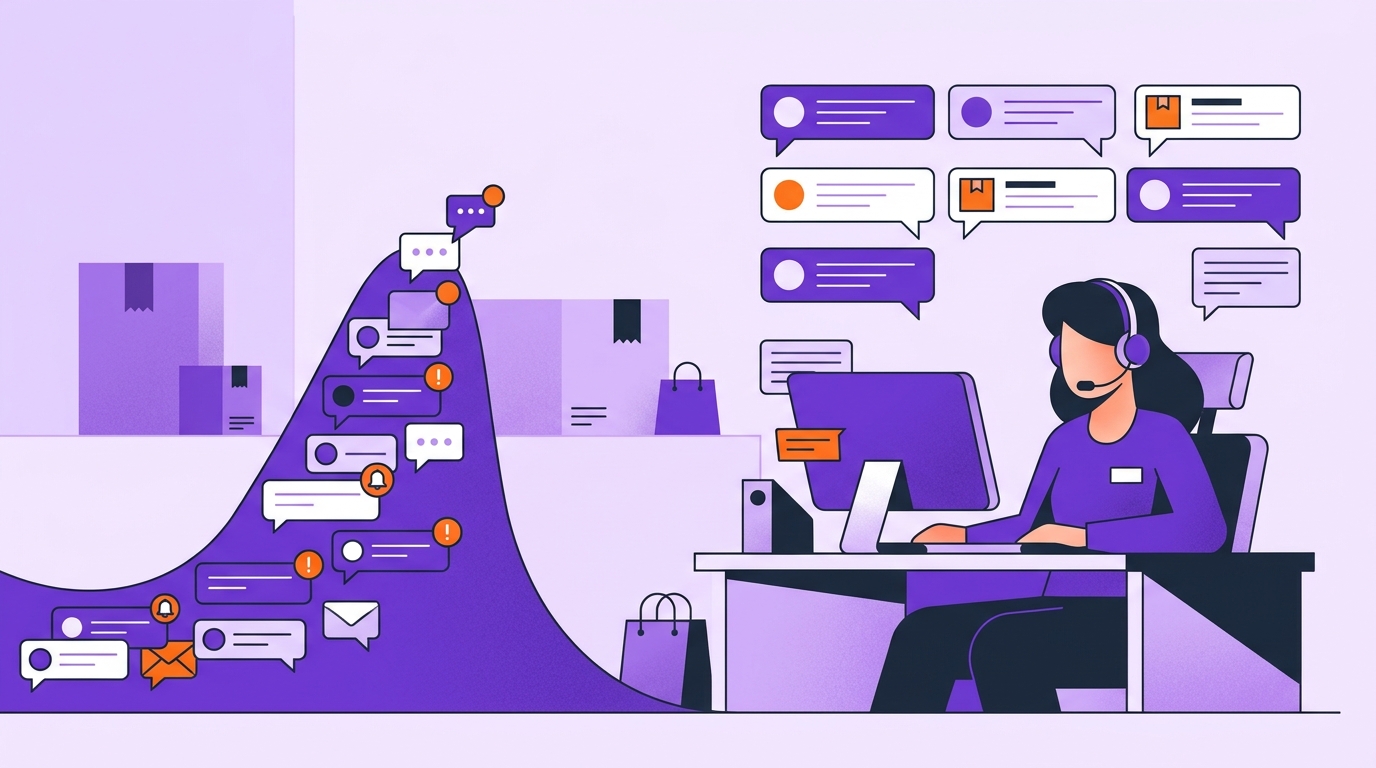
When support is left out of the plan, the outcome is familiar: first response time climbs, the same question is answered dozens of times, refund disputes wait in a queue, and the customer you paid to acquire is lost in their first contact. This guide is not about discount rates or campaign calendars. It is about support capacity, automation and the refund and shipping workflow. The goal is to turn "how do I get ready for the campaign?" into "which questions go to automation, which stay with people, and what do I measure?"
We will mention Supsis modules (chatbot, automation, ticketing, forms, WhatsApp) where they are the practical answer, but the focus is an operation that works during peak season, not a product tour.
1) Why does support load behave differently during a campaign?
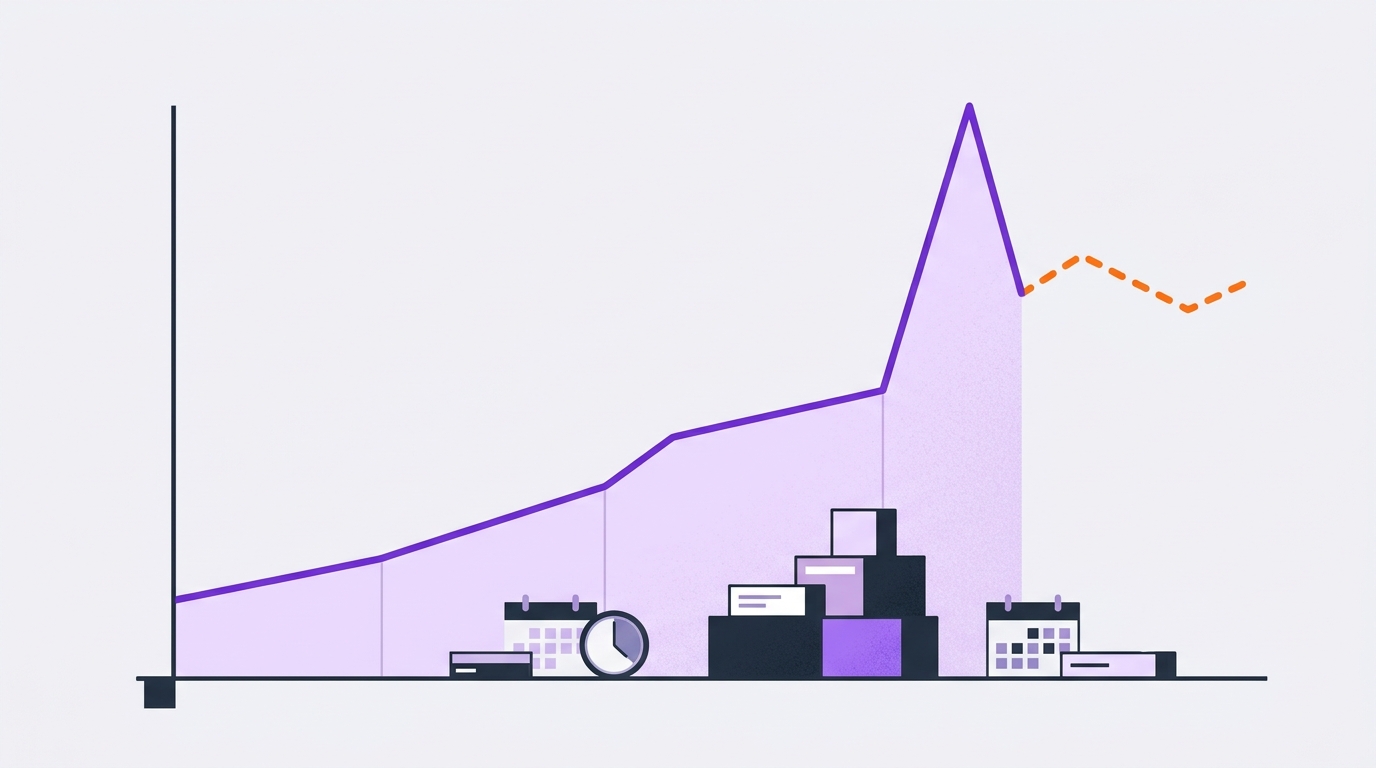
The demand that reaches your support team during a peak week is not a simple copy of a normal week. Several things change at once:
- Volume rises. On a campaign day a single customer writes several times: first about stock, then about the delivery date, then about the shipment status, and finally about the return policy. The number of people may double while the number of conversations triples.
- The mix of questions shifts. Traffic that is mostly "product features" during the year turns into "where is my order, why is my parcel late, can I return this, how do I get my invoice, can I combine my coupons?" during the campaign week. Their common trait: the answer already exists in a system and repeats.
- The channel mix changes. Phone traffic gives way to written channels; WhatsApp, Instagram DMs and web chat let the same customer write from three places. The more channels you run, the harder it is to see how many times the same issue has been discussed.
- Queue effects grow. One unresolved conversation holds up ten more behind it. When first response time doubles on a peak day, the cause is usually not agent speed but exception cases sitting in the queue.
- The same team does two jobs. Pre-purchase questions (stock, delivery date, campaign terms) arrive in the morning; post-purchase questions (shipping, damage, returns) arrive in the afternoon. Each needs different information, different authority and different patience.
That is why the first question in campaign planning should not be "how many people will be on shift?". First separate the requests that repeat from the requests that genuinely need a person.
2) A four-week preparation calendar
The four weeks before 27 November 2026 are enough time if each week has a concrete deliverable, not just a feeling of being prepared.
Week 1 — question inventory and knowledge base clean-up. Sort the last 90 days of conversations by type: order status, shipping, returns, invoice, stock, campaign terms, other. List the 20 most frequent questions and write one verified answer for each. Every place where two agents give two different answers to the same question will become a contradiction during the campaign week. By the end of the week you should have a single FAQ document with an owner per section.
Week 2 — automation scenarios and form/ticket flows. This is the build week. Chatbot flows, order and shipment tracking, the return and exchange request form, ticket priorities and escalation rules are drafted. The measure of success is not the number of flows but whether each flow has a written statement of which question it closes.
Week 3 — end-to-end testing. The most frequently skipped week. What happens when someone enters a wrong or partial order number? What does the bot say when the carrier integration returns nothing? When a customer says "return", does a form open or a ticket? How is a handover triggered by an unhappy message? Run the same scenarios with your second-line agents so they are not seeing the screen for the first time on campaign day.
Week 4 — shifts, thresholds and duty roster. Attach escalation thresholds to numbers (for example a repeated issue within one conversation, a ticket past a defined waiting time, an explicit dissatisfaction signal). Build the shift plan on last year's hourly volume if you have it; if not, start with a conservative assumption and correct it live on campaign day. Confirm that WhatsApp templates are approved and that the backup agent list is ready.
3) Which questions go to automation and which stay with people?
This is the most practical decision in this guide. Five criteria do most of the work:
- Repetition. If the same answer is given dozens of times a week, it is an automation candidate.
- Verifiability. If the answer can be read from a record such as an order number, shipment status or invoice, a bot is faster and less error-prone than a person.
- Transaction risk. Irreversible actions such as refunds, address changes or discount adjustments require authority. They should not go to automation until the rules are written.
- Emotional weight. Damaged deliveries, lost parcels and claims of harm require a human counterpart. Here the bot can only provide the acknowledgement and the response-time promise.
- Exception nature. If the situation is outside the rule set (a late return, a used item, stacked coupons), the resolution is one-off and does not fit automation.
Chatbot
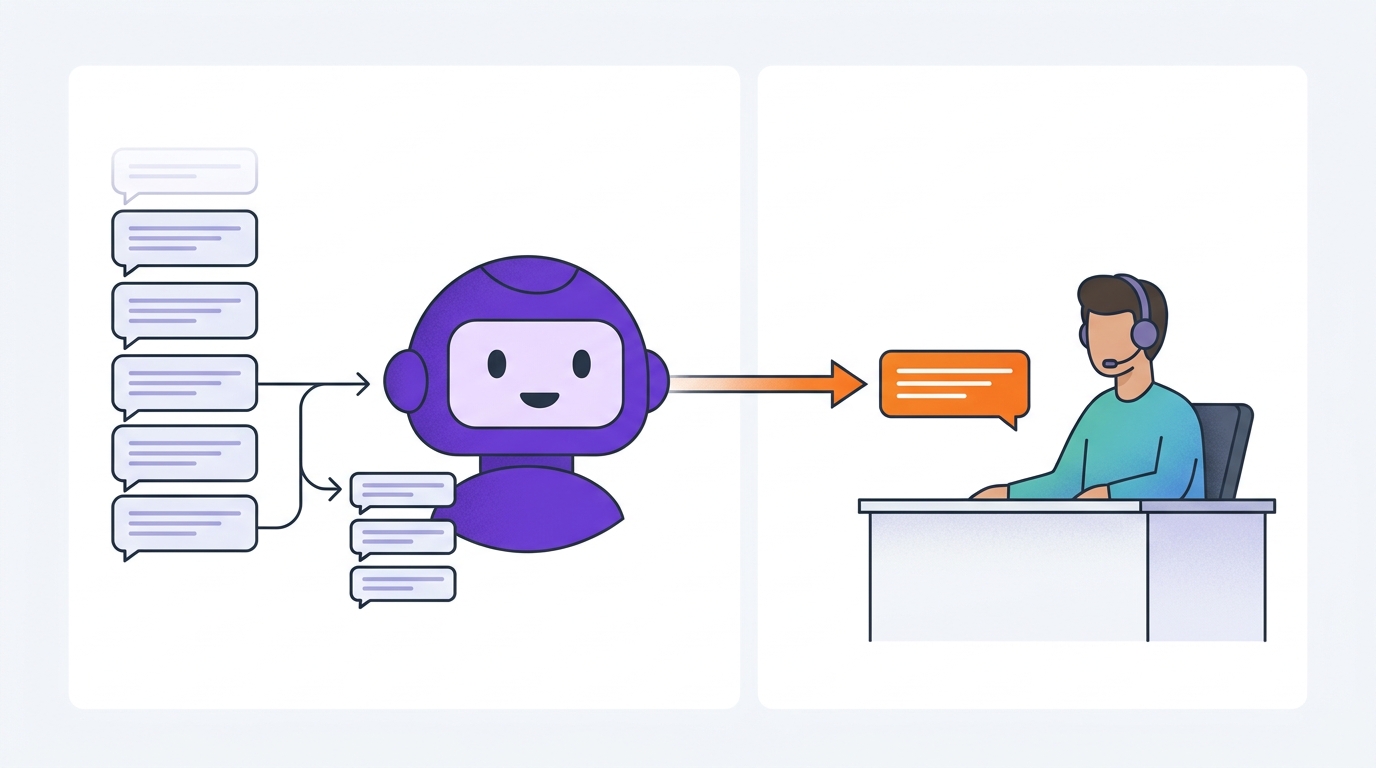
A chatbot is the first responder for frequent questions with stable answers. In a campaign week its best use is the moment a customer does not want to wait: where is my parcel, what is the return policy, how do I get my invoice. A well-built chatbot does not try to answer everything; when it does not know, it says so and hands the conversation over. Feeding chatbot flows with updated campaign information before the launch covers most repetitive demand.
Automation
Automation is a rule set that runs when an event happens: a message when an order ships, a notification when a parcel has shown no movement for two days, an automatic first reply when a return form is submitted. The goal is to inform customers before they have to ask. Proactive updates remove a meaningful share of "where is my order" messages before they are ever created. Do not skip consent and opt-in; agree in advance with your otomasyon sistemi which trigger sends which message.
Ticketing
A ticket is for work that must be tracked and owned. Return disputes, lost parcels, damaged items and delivery-address requests stay open until someone closes them, and ownership stays visible. The real benefit during peak season is not speed but not losing things: a complaint received on WhatsApp three days ago can only be remembered if it was recorded. Review your priority rules in ticket yönetimi before the campaign starts.
Human handover
Handover is not a failure; it is part of the design. But when and how it happens must be written down: which phrase, which waiting threshold, which ticket priority. The person taking over should already have the conversation history and the details the bot collected (order number, product, reason), so the customer never has to repeat themselves. If the handover rate is very high the problem is usually intent recognition; if it is very low the bot may be resisting for no reason.
4) Getting the FAQ knowledge base ready for the campaign
During a campaign the knowledge base is not a document you write once; it is an asset with daily maintenance. Three rules work:
- One source of truth. Shipping times, return conditions, delivery dates and invoice information live in one place with a last-updated date. The marketing page, the bot answer and the agent script should use the same sentence.
- Campaign-specific entries. Questions such as "can campaign products be returned?", "do coupons stack with other discounts?" and "can I change my address after ordering?" rarely appear during the year and explode during campaign week. Answer them in advance instead of improvising.
- A ten-minute daily update. Throughout the campaign one person should log new exceptions and changed conditions every morning. Without updates the bot repeats a wrong answer with confidence, which is worse than not answering.
Also design the "I don't know" behaviour on purpose: the bot should not guess, it should open the relevant form or hand over to a person. The biggest reputational risk on campaign day is a bot delivering wrong information in a confident tone.
5) Automating order and shipment status enquiries
This is where the investment returns fastest. The build order is simple but no step can be skipped:
- Identity verification. The query must match an order number and the phone number or e-mail registered on that order. A lookup that opens with an order number alone risks exposing someone else's order details.
- One source of truth. Shipment status comes from the carrier integration, not from what an agent types. If carrier data is delayed, the bot should say so rather than invent an estimated delivery date.
- Fallback. "No record found" is not a dead end; it is a reason to open a ticket. Test this scenario before launch, because during peak days it is the one you will hit most.
- A proactive layer. Automatic updates when parcel movement stalls or the delivery date slips reduce inbound volume.
Ready-made integrations work well for data-driven flows such as order and shipment lookups; document which carrier provides which data before the campaign starts.
6) The return and withdrawal workflow: form, ticket and human handover
The highest volume after a campaign appears on the returns side, and the wave typically arrives two to three weeks after the sale. The workflow has three stages:
- Collecting the request. A structured form instead of free text: order number, product, reason, preferred resolution (refund or exchange) and photos where needed. The form puts every return into the same data shape, so the team prioritises from records rather than guesses. A campaign-specific form defined in form yönetimi performs better than a general-purpose form used all year.
- An automatic first reply with a time commitment. The moment the form is submitted, the customer should receive "your request has been received, we will respond within X business days." That single message prevents a large share of "I returned it and nobody replied" follow-ups.
- What stays with people. Used items, late requests, damaged deliveries and partial refund disputes stay human. That decision is legal and commercial; it cannot be automated.
The return conditions themselves (withdrawal period, exceptions) must be written according to current legislation and your own sales contract. A broad statement such as "anyone can return anything" during campaign season creates expectations that are hard to manage later.
7) Escalation and shift planning during peak hours
Escalation should not depend on a subjective threshold such as "when the customer is angry". Three measurable triggers are enough:
- Waiting time. A conversation past a defined threshold drops automatically to the second line or a manager.
- Repeated contact. If the same customer writes about the same issue a second time, the resolution did not hold; the case moves up.
- Dissatisfaction signal. An explicit complaint, anger accompanying a return request, or "I will report this" raises priority.
Last year's hourly volume is the best input for shift planning. Without data, start from a conservative assumption: early morning and 20:00–23:00 are the heaviest windows on a campaign day for most e-commerce brands. Nominate two or three people from marketing and operations as second-line duty agents; they only need to know the knowledge base and the handover rules, not how to solve everything.
Write down your night and weekend coverage explicitly. What the customer is told outside those hours, and what response time is promised, must be decided before the campaign.
8) Campaign discipline in WhatsApp and multi-channel support
During campaign season the same customer writes on WhatsApp, asks on Instagram and sends an e-mail. Running three channels separately produces both duplication and inconsistency. What matters:
- One history. All conversations with a customer should appear on one screen so an agent can say "you also wrote to us on Instagram".
- Template discipline. Prepare approved templates before the campaign; waiting for template approval on campaign day costs hours. Check approved templates and consent status in WhatsApp Business API in advance.
- Separate marketing from support. Campaign announcements go out as bulk sends; a support conversation needs a personal reply. Mixing them on the same line makes customers mistake a support reply for a promotion.
- Consent and frequency. The same customer should not receive a shipment update, a campaign announcement and a return reminder within a short window. Plan frequency from one place.
9) What should you measure?
Measurement during a campaign should be more than the usual handful of metrics with a few extras attached. At minimum, compare the following against a four-week baseline taken before the campaign:
- First response time by channel. Not the average but the distribution: the slowest ten percent carry the real risk.
- Share of contacts closed by automation. The percentage of conversations a bot resolves without handover.
- Handover rate and reasons. The reason mix tells you which knowledge base gap to close.
- Repeat contact rate. How often the same customer writes about the same issue; "the bot answered but the customer wrote again" should be tracked separately.
- Ticket age and resolution time. Especially for post-campaign return cases.
- Satisfaction (CSAT). A single question at the end of a conversation gets more responses than a long survey.
Keep these on one dashboard that is checked every morning during the campaign. A metric nobody reviews daily is just a story you hear at the end of the month.
10) Post-campaign return wave and the learning loop
The campaign is not over when the discounts end. Shipping delays, return requests and "I received this as a gift and want to exchange it" messages continue into mid-December. That period needs its own plan: keep the return form open, assign a dedicated agent to return cases, automate return status answers and manage expectations.
The real value lies in carrying the collected data into the next campaign. Write down three things at the end: the updated version of your 20 most frequent questions, the list of topics automation could not resolve, and the distribution of handover reasons. These three files are your most valuable input when you start preparing in the same weeks next year. Updating product pages and FAQ content from these questions is what reduces support volume at the source.
11) A ten-item pre-campaign checklist
- The 20 most frequent questions live in one verified FAQ document with a named owner.
- The order and shipment lookup flow has been tested with wrong and partial order numbers.
- When the bot says it does not know, handover or form opening actually works.
- The return and exchange request form is live and specific to the campaign season.
- Ticket priorities and escalation thresholds are defined with numbers.
- The shift plan and second-line backup agent list are ready.
- WhatsApp templates are approved and consent lists are current.
- Shipping and order integration data flows are verified.
- The measurement dashboard is ready with a pre-campaign baseline.
- A separate plan and learning file exist for the post-campaign returns period.
Peak season is when the limits of a support team become visible. Preparation simply means drawing those limits in advance: which questions are answered automatically, which work stays with people, and which metrics tell you whether it worked. Teams that answer those three questions before the campaign experience the peak week as a planned week rather than a crisis.
To see how the modules behind this framework work together during a campaign period, explore Supsis.
Frequently asked questions
How many weeks before Black Friday 2026 should I start preparing support? Four weeks is realistic. Reserve the final week before 27 November 2026 for testing and shifts; the question inventory and knowledge base clean-up should be finished in week one.
Which questions should a chatbot answer and which should it hand over? Repeatable questions that can be verified in a system: order status, shipping, return conditions, invoice and delivery dates. It should hand over damaged deliveries, lost parcels, late returns and anything containing a dispute.
How can order and shipment status be automated? By verifying identity with the order number plus the registered phone or e-mail, reading status from the carrier integration, opening a ticket as a fallback when no record is found, and sending proactive updates when delays occur.
Why manage returns through a form and a ticket? A form puts every request into the same data shape so prioritisation rests on records rather than guesses. A ticket makes ownership and age visible and keeps cases from getting lost during peak days.
What actually reduces first response time on busy days? Moving repeatable questions to automation, routing exception cases waiting in the queue to a separate line, and sending proactive updates when shipments are delayed. Hiring more agents is usually the most expensive and slowest fix.
How do you prepare for the post-campaign return wave? Keep the return form open after the campaign, automate return status answers, assign a dedicated agent to return cases and set expectations in the first reply.
Which metrics show that support preparation worked? First response time by channel, the share of contacts closed by automation, handover rate and reasons, repeat contact rate, ticket age and CSAT. Compare all of them with a four-week pre-campaign baseline.